
Illustration only
Sample Insight Report
An example of the doctor-reviewed blood-test report, with the Health Score, prevention plan, and biomarker results. Sample Patient is fictional.
BIOCLIN Insight Report™
Executive Panel
- Patient
- Sample Patient
- Sex · date of birth
- Male · 1 January 1988
- Blood test
- Executive Panel
- Sample collected
- 22 October 2026
- Report issued
- 29 October 2026
- Reviewed by
- BIOCLIN clinical team
- Health Score™
- 81/100
- Health Age™
- 36
- Actual age 38
- Biological age estimate
- 37
- Actual age 38
Your overall picture is strong from a prevention point of view. Blood count, kidney and liver function, blood sugar, thyroid and male hormone results are all reassuring. The main areas to work on are a cholesterol pattern with raised LDL and triglycerides, and a vitamin D level in the insufficient range. Your Health Age and biological age are estimated slightly below your actual age.
- LDL cholesterol and triglycerides are above target.
- Vitamin D is in the insufficient range.
- Blood count, kidney, liver, sugar and hormone results are reassuring.
Clinician takeaway
Healthy foundations, with cholesterol and vitamin D to focus on.
Most of your blood markers sit comfortably within range. LDL cholesterol and triglycerides are above target, which is common and very responsive to diet and activity changes. Vitamin D is insufficient, as is typical in the UK in autumn and winter.
What to do
- 1Follow the eating and activity steps in your prevention plan, then repeat a cholesterol profile in about 3 months.
- 2Consider a daily vitamin D supplement through autumn and winter, in line with NHS guidance.
- 3Repeat your blood test and Health MOT in 12 months to track your markers over time.
Health insights
Heart & cholesterol insight
Needs attentionHDL and lipoprotein(a) are reassuring, but LDL, total cholesterol and triglycerides are above target. Lifestyle changes can bring these down.
Vitamins insight
Needs attentionVitamin D is insufficient. Active B12, folate and iron stores are all within range.
Blood sugar insight
ReassuringHbA1c, glucose and insulin are all in the healthy range, with no sign of prediabetes.
Kidney insight
ReassuringCreatinine, urea and eGFR show your kidneys are filtering well. Uric acid is within range.
Liver insight
ReassuringLiver enzymes, bilirubin and proteins are within range, with no sign of liver strain.
Hormones insight
ReassuringThyroid function, testosterone, SHBG and PSA are all within the expected range for your age.
Inflammation insight
Reassuringhs-CRP and ESR show no inflammatory signal.
Blood pressure insight
ReassuringResting blood pressure at the clinic visit was within the healthy range.
Personal prevention plan
- 1Eat for your heart. Favour a Mediterranean-style diet: more vegetables, pulses, oats, nuts and oily fish; less saturated fat, sugar and ultra-processed food.
- 2Move most days. Aim for 150 minutes of brisk activity a week plus two strength sessions. This helps lower triglycerides.
- 3Top up vitamin D. Get daylight when you can, and consider a supplement from October to March.
- 4Keep alcohol moderate. Stay within 14 units a week, spread over several days, to support liver and triglyceride health.
- 5Sleep and recover. Regular sleep and stress management support long-term heart and metabolic health.
Follow-up
Repeat a cholesterol profile and vitamin D in 3 months to see how your changes are working. No urgent GP review is needed based on these results.
Since your last MOT
Since the last visit, LDL cholesterol has eased from 3.6 to 3.3 mmol/L and triglycerides from 2.2 to 1.9 mmol/L. Vitamin D has risen from 28 to 42 nmol/L and is still insufficient.
Trends
Your last 2 Health MOTs
LDL cholesterol
3.3mmol/L-0.3
Range <3
Triglycerides
1.9mmol/L-0.3
Range <1.7
Vitamin D
42nmol/L+14
Range ≥50
Biomarkers
Lipids
Blood fats such as cholesterol and triglycerides, used to understand cardiovascular risk.
Total cholesterol
5.6 mmol/L
LDL cholesterol
3.3 mmol/L
HDL cholesterol
1.4 mmol/L
Non-HDL cholesterol
4.2 mmol/L
Triglycerides
1.9 mmol/L
Cholesterol:HDL ratio
4 ratio
Apolipoprotein B
0.88 g/L
Lipoprotein(a)
18 nmol/L
Metabolic
How your body handles sugar and energy, including glucose and HbA1c.
Uric acid
330 µmol/L
HbA1c
36 mmol/mol
Glucose
4.9 mmol/L
Insulin
6.8 mIU/L
Liver
Enzymes and proteins that show how well the liver is working.
ALP
72 IU/L
ALT
24 IU/L
AST
21 IU/L
GGT
26 IU/L
Total bilirubin
9 µmol/L
Albumin
45 g/L
Total protein
72 g/L
Kidney
Markers of kidney filtration and waste handling, including creatinine and eGFR.
Urea
5.1 mmol/L
Creatinine
82 µmol/L
eGFR
98 mL/min
Sodium
140 mmol/L
Potassium
4.4 mmol/L
Corrected calcium
2.38 mmol/L
Magnesium
0.86 mmol/L
Vitamins
Nutrient stores such as vitamin D, B12, folate and iron.
Ferritin
145 µg/L
Serum iron
19 µmol/L
Transferrin saturation
31 %
Vitamin D (25-OH)
42 nmol/L
Active B12
72 pmol/L
Serum folate
9.8 ng/mL
Hormones
Thyroid and sex hormones that help regulate energy, mood and metabolism.
TSH
1.8 mIU/L
Free T4
15.2 pmol/L
Free T3
5 pmol/L
Testosterone
18.4 nmol/L
Free testosterone
0.39 nmol/L
SHBG
34 nmol/L
Oestradiol
98 pmol/L
Prolactin
210 mIU/L
PSA
0.6 µg/L
Inflammation
Markers of inflammatory activity such as CRP.
hs-CRP
0.8 mg/L
ESR
6 mm/hr
Haematology
The full blood count — red cells, white cells and platelets.
Haemoglobin
152 g/L
Red blood cells
5.02 x10¹²/L
Haematocrit
0.45 L/L
Mean cell volume
89 fL
Mean cell Hb
30.3 pg
MCHC
338 g/L
Red cell distribution
12.8 %
Platelets
248 x10⁹/L
White blood cells
6.1 x10⁹/L
Neutrophils
3.6 x10⁹/L
Lymphocytes
1.9 x10⁹/L
Monocytes
0.45 x10⁹/L
Eosinophils
0.15 x10⁹/L
Basophils
0.04 x10⁹/L
Clinic measurements
SpirometryHow much air your lungs hold and how fast you can breathe out.
Interpretation: Spirometry is within the expected range.
UrinalysisUrine dipstick screen for kidney, bladder and metabolic signs.
Leukocytes (LEU)
Normal: Negative
Negative
Nitrite (NIT)
Normal: Negative
Negative
Blood (BLO)
Normal: Negative
Negative
Protein (PRO)
Normal: Negative
Negative
Albumin (ALB)
Normal: below 3 mg/dL
1 mg/dL
Creatinine (CRE)
Normal: 10–300 mg/dL
80 mg/dL
ACR (ACR)
Normal: below 30 mg/g
12 mg/g
Glucose (GLU)
Normal: Negative
Negative
Ketones (KET)
Normal: Negative
Negative
Bilirubin (BIL)
Normal: Negative
Negative
Urobilinogen (URO)
Normal: up to 1 mg/dL
0.2 mg/dL
Specific gravity (SG)
Normal: 1.005–1.030
1.015
pH (pH)
Normal: 5.0–8.0
6
Ascorbate (ASC)
Normal: Negative
Negative
Calcium (CA)
Normal: range not available
5 mg/dL
Interpretation: No abnormality on the urine dipstick.
12-lead ECGA recording of your heart's electrical activity at rest.
HEART RATE
68 bpm
60–100
RHYTHM
Sinus rhythm
Sinus rhythm
PR INTERVAL
160 ms
120–200
QRS
88 ms
below 120
QTc
410 ms
below 450
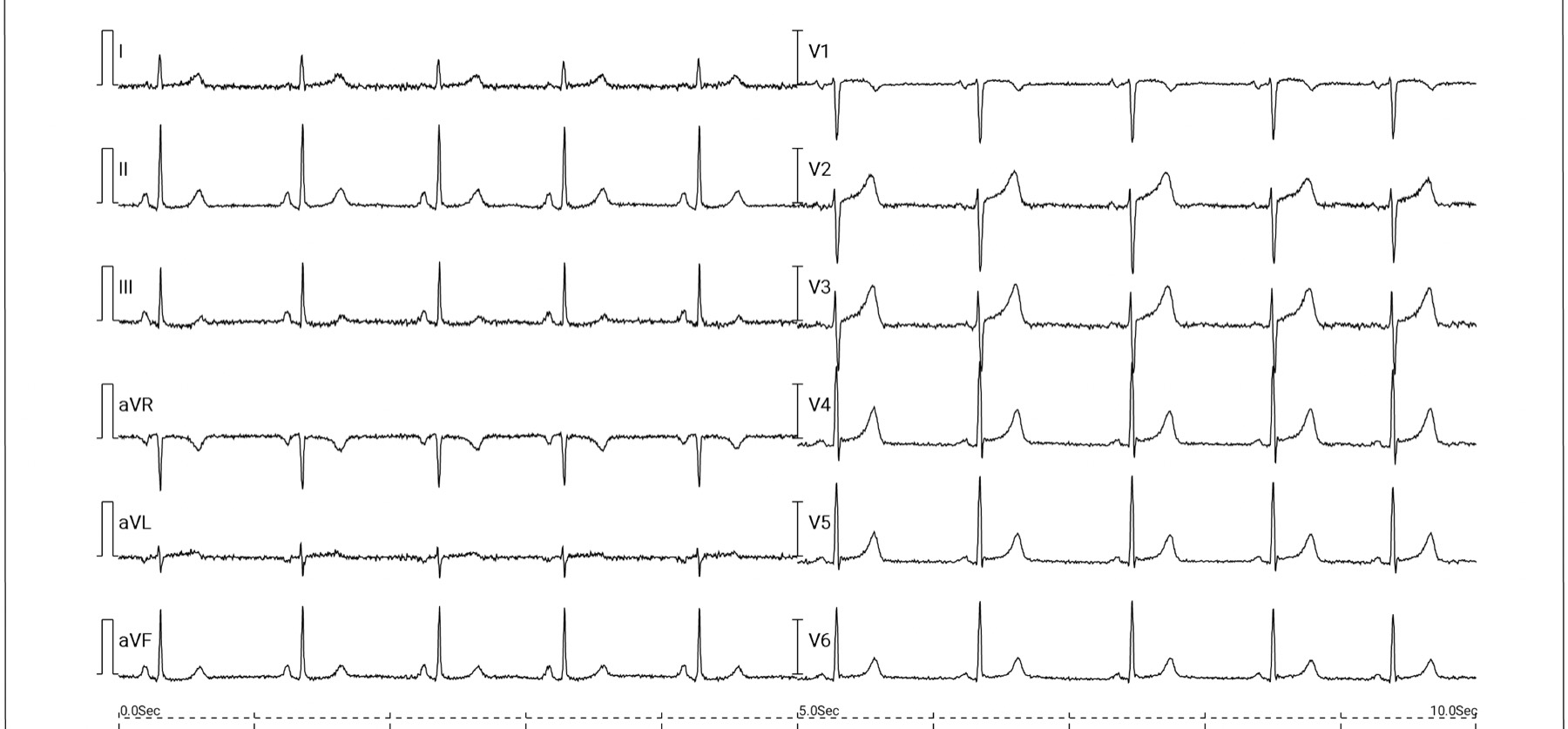
Your full 12-lead printout is attached to this report.
Interpretation: Machine reading: Sinus rhythm, normal ECG. Normal sinus rhythm at rest. Reviewed by: BIOCLIN clinical team.
Notes and limitations
Sample report. Fictional patient, for illustration only.
This Insight Report is a preventative review of your MOT results. It is not a diagnosis or a substitute for NHS care. Speak to your GP if you have symptoms or concerns. Your physical assessments are in your separate Health MOT Report.